Custom store design and full setup — From AED 4,000
For a defined catalogue, an established brand system, limited custom sections, essential configuration, QA, and team handover.
Shopify development and store setup costs in the UAE depend on design, catalogue, content, languages, integrations, migration, retail, and the level of operational change required.

Vexa custom Shopify store design and full setup starts from AED 4,000. The final price depends on agreed deliverables, catalogue, languages, integrations and migration. Platform subscriptions, themes, apps and other third-party fees are separate. Advanced and Plus projects are quoted after discovery, not priced as a universal package.
For a defined catalogue, an established brand system, limited custom sections, essential configuration, QA, and team handover.
For custom UX and theme development, bilingual content, migration, richer product data, and selected integrations.
For Shopify Plus, B2B, multi-market, headless, custom apps, advanced migration, or integration-heavy programmes.
The main cost drivers are customer-journey complexity, design maturity, number of unique templates, catalogue quality, product-data transformation, content production, Arabic and English delivery, migration history, integrations, custom applications, POS, analytics, SEO continuity, QA, training, and launch coordination. A small catalogue can still be complex if operational rules are unclear.
Vexa estimates these workstreams separately where useful. This lets stakeholders see which requirements drive the budget and decide what belongs in the first release, a later phase, or an internal responsibility.
A scoped implementation can include discovery, UX and interface design, theme development, Shopify configuration, catalogue structure, app setup, integrations, migration, redirects, analytics, responsive QA, accessibility checks, training, and launch support. The proposal names the included activities and acceptance criteria.
Content writing, photography, translation, extensive data cleanup, custom software, or ongoing optimisation may be separate depending on the project. Assumptions explain what Vexa needs from the merchant and what happens when requirements change.
Shopify subscription fees, paid themes, apps, payment processing, domains, email, translation services, hardware, middleware, cloud infrastructure, external licences, and provider onboarding are normally paid directly by the merchant. Some fees are recurring and may change with usage or provider terms.
A total-cost view should cover at least the first year, not only launch. Vexa identifies known external costs during discovery and flags usage-based items so the business can budget for operation and growth.
A decision-ready budget has separate lines for discovery and implementation, Shopify subscription, themes, apps, domain and email, content and translation, payment processing, shipping or fulfilment tools, POS hardware and software, integrations, analytics, maintenance, and internal team time. Mark every item as one-time, monthly, annual, usage-based, or transaction-based so the launch price is not confused with the cost of operating the store.
Model a base case and a growth case using realistic order volume, average order value, countries, currencies, locations, and staff. The total should show cash paid before launch, recurring first-year commitments, and costs that rise with sales or complexity. This makes Shopify and alternative-platform proposals comparable on the same operating assumptions.
Payment cost is more than one headline rate. Depending on the selected route, the merchant may pay provider processing, fixed transaction, international-card, currency conversion, refund, chargeback, reserve, and Shopify third-party transaction fees. Settlement timing also affects working capital. Current figures must come from the merchant's Shopify admin and signed provider terms because eligibility and rates can change.
Shopify Payments is currently in early access for certain UAE merchants. Vexa's dated Shopify Payments and payment gateways guide explains the current eligibility, online payment methods, payout details, POS limitation, and comparison questions that should be resolved before a gateway is included in a proposal.
A low quote may exclude discovery, content preparation, data transformation, integration testing, accessibility, analytics, redirects, training, or launch support. Those tasks do not disappear; they become merchant workload, change requests, defects, or lost customer and search continuity.
Compare proposals by deliverables, assumptions, ownership, quality assurance, post-launch support, and maintenance implications. Ask how reusable the theme will be, how exceptions are tested, and what documentation the team receives.
When the requirement is clear, Vexa can estimate a focused project directly. When multiple stakeholders, systems, languages, or migration risks are involved, paid discovery creates the architecture and backlog needed for a dependable estimate.
The discovery output gives the merchant a decision-ready scope even if implementation is phased. It reduces contingency caused by uncertainty and makes trade-offs visible before major development begins.
A useful quotation names the business objective, deliverables, templates and journeys, catalogue and content assumptions, Arabic and English responsibilities, migration data, integrations, payments, delivery, tax inputs, analytics, SEO continuity, accessibility, quality assurance, training, launch support, warranty, ongoing support, milestones, acceptance criteria, ownership, exclusions, and change process. Third-party and merchant-paid costs should be visible rather than hidden inside an implementation total.
Ask every shortlisted supplier to price the same scope and state the same assumptions. If one quote is materially lower, identify which discovery, content, data, testing, documentation, or launch responsibilities moved to the merchant. A lower total can be appropriate, but the operating work still needs an owner.
Every engagement starts with a working session covering customers, catalogue structure, operational constraints, integrations, analytics, and the commercial result the store must support. Vexa turns that input into a prioritised scope with named owners, dependencies, acceptance criteria, and a launch sequence. This keeps design decisions tied to real business requirements and gives stakeholders a shared definition of done.
During delivery, work moves through design review, development, content and data preparation, quality assurance, and team handover. Testing covers responsive layouts, accessibility, storefront behaviour, checkout-adjacent journeys, analytics, notifications, and the operational exceptions that are most likely to affect customers. After launch, the backlog is organised around evidence rather than assumptions, so the next improvements have a clear reason and measurable outcome.
A UAE storefront has to account for local buying expectations as well as platform mechanics. Vexa plans Arabic and English content, right-to-left presentation, mobile-first journeys, local payment options, delivery rules, customer communications, VAT-aware operations, and the hand-offs between ecommerce and retail teams. The exact setup depends on the merchant, provider eligibility, and operational model, so recommendations are validated during discovery rather than presented as a generic app list.
The result is a Shopify implementation that the internal team can operate. Documentation and training cover the recurring tasks behind products, collections, promotions, orders, returns, inventory, content, and reporting. Technical choices are recorded so future developers can understand why the store works the way it does and improve it without rebuilding the same context.
Vexa is listed in Shopify’s Partner Directory as an Abu Dhabi service partner, with partner experience dating to September 2020 and a 5.0 rating from 12 reviews when last verified.
Scope before commitment
Your products and catalogue size, whether this is a new or existing store, required languages, systems to connect, content readiness and target launch. You do not need an existing store to start the conversation.
Agree acceptance checks for products, variants, cart, payments, delivery, languages and mobile. Identify who owns content, accounts and handover tasks. Timing depends on scope, approvals and provider eligibility—not a fixed promise for every store.
Project examples
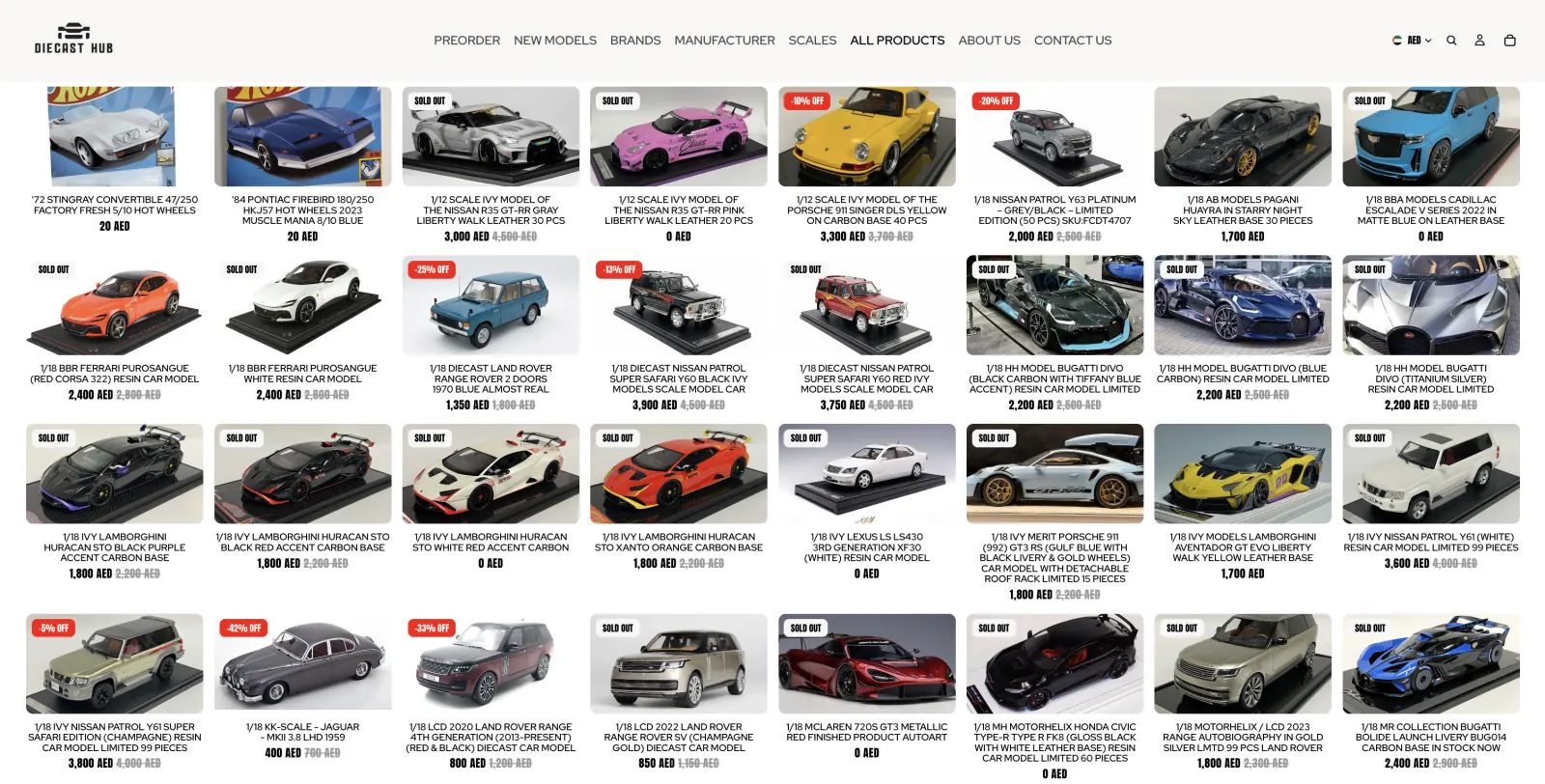
See how the Diecast Hub project presents scale-model cars through homepage discovery, collections and detailed product pages.
Useful when planning a product-rich retail store with clear collection and product journeys.
Explore the project
Explore the Chapters & Co project screenshots: education programs, the resource library, teaching videos and digital book readers.
Useful when your Shopify project also needs account-based content or a more specialized application experience. Those requirements need separate discovery.
Explore the projectScreenshots demonstrate interfaces and user journeys, not measured sales growth or a guarantee of the same outcome. Each project has its own scope.